





 Updated

Now that the basics of technical and fundamental analysis covered in the previous articles, let us dive into the methods traders may use to enter a Buy or Sell position in the markets. Whether you’re a day trader or a long-term investor, having an optimal entry when placing a trade plays an important role in achieving trading success.
Key Points
- Market Orders, also known as instant executions, are trade orders executed at the current market price, ideal for traders who wish to enter the market promptly, though they may experience slight price fluctuations due to market volatility.
- Limit Orders, or pending orders, are set to execute only when the market reaches a specified price; these orders ensure traders do not pay more than their desired entry price and are useful for those seeking precise market entry without continuously monitoring prices.
- Stop Orders are designed for traders who prefer to enter the market only once it moves in a favourable direction; a Buy Stop is triggered when the price rises to a predetermined level, while a Sell Stop is triggered when the price falls to a predetermined level.
What Are The Different Order Types?
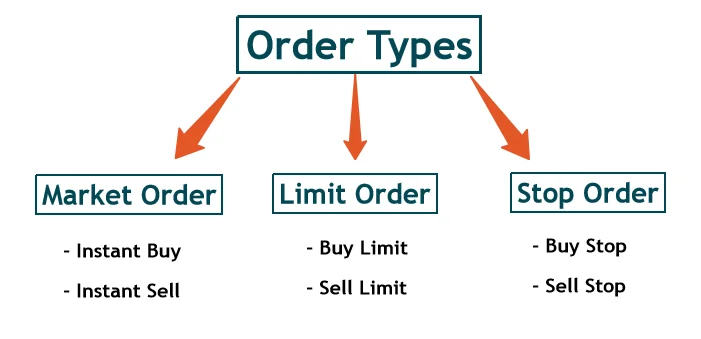
In forex, order types fall into 3 main families: market, limit, and stop. Traders use these families in 6 common ways: instant buy, instant sell, buy limit, sell limit, buy stop, and sell stop. Each one suits a different goal—enter fast, enter at a better price, or enter only if the price moves past a level.
Quick rule to remember
- A limit order aims to buy at a lower price or sell at a higher price than the current price.
- Stops trigger above or below the current price to follow momentum.
Market Order = Instant Execution Buy/Sell
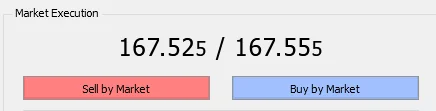
The most common order type is a market order, also known as an instant execution.
Just as the name implies, the Buy or Sell position placed by the trader is instantly executed at the current price of the market, on a real-time basis. Depending on the chosen broker, the order placed automatically searches for the best available market price to execute.
Instant executions are particularly useful for traders who want to trade at the quoted price.
Do take note of the Forex market’s volatility, which can lead to rapid price changes. Hence, there will be instances in which the marker order is executed at a slightly different price than the intended one.
Limit Order (Pending Order) = Buy/sell Limit
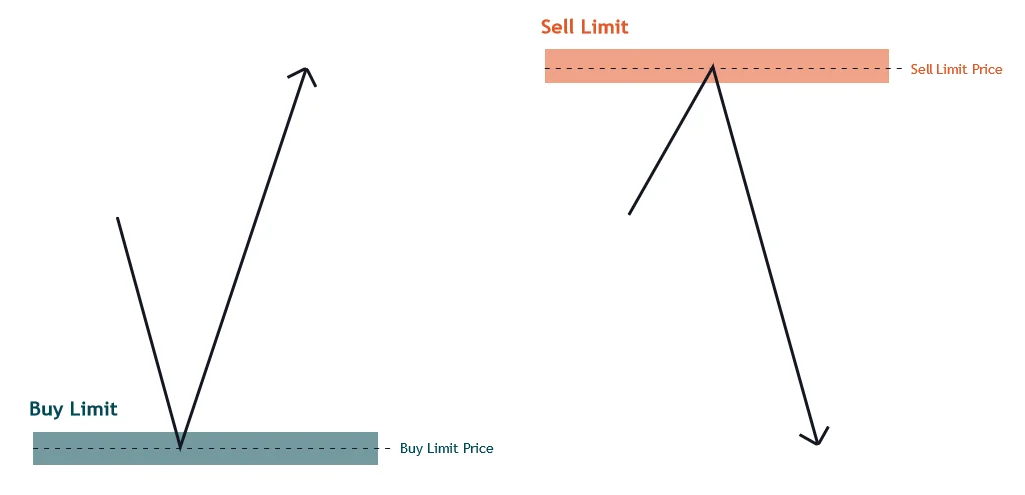
A limit order will only be executed if the price reaches the trader’s desired level, whereas the order will remain unfilled if the price does not reach such a level.
Unlike instant execution, where the trade is live from the moment traders buy or sell, traders would not pay a cent more for the order, but it’s possible the order could be executed at a price below the predefined level.
Limit orders are typically used by traders who aim for the sharpest possible entry. Limit orders also do not require constant attention to the financial markets, as the position is opened only when the predefined limit order price is reached.
Stop Order = Buy/Sell Stop
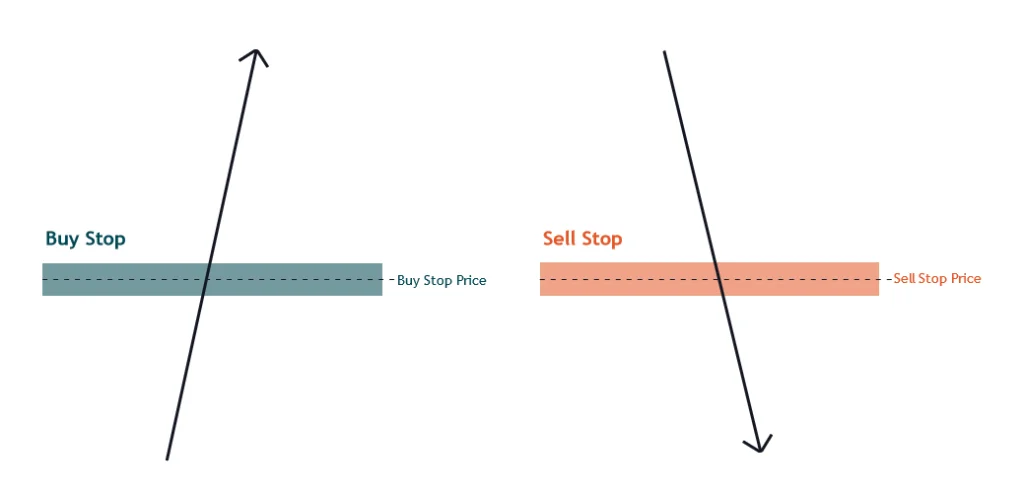
Stop orders are usually used by traders who want to confirm that the market is moving in their favour before entering a trade, because a stop order is always executed in the direction the market moves. Traders using stop orders want to buy into the markets only after prices have risen to the buy stop price, or sell only after the markets have fallen to the sell stop price.
So, which market order type should you be using?
Different order types serve different trading preferences and goals. With different order types, traders have a range of options for entering the markets.
Want to try trading CFDs with different market orders? Practise it on our demo account.