





 Updated
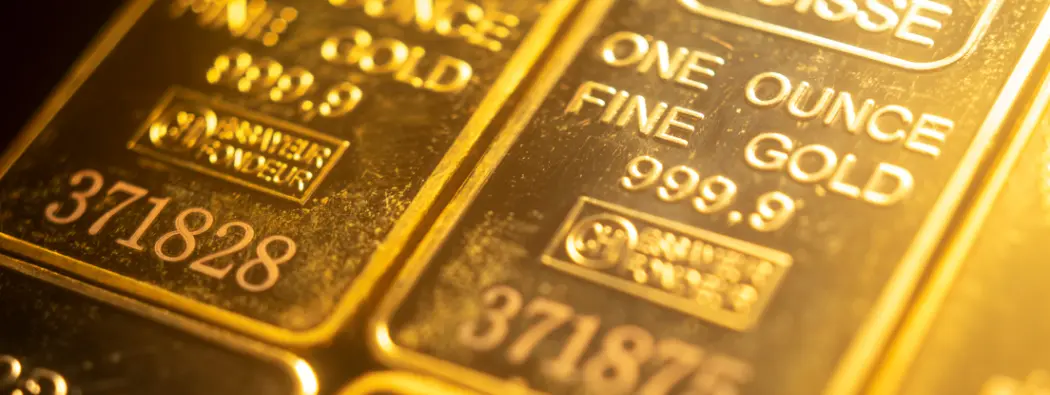
For centuries, gold has been recognised as a safe-haven asset and a store of value during periods of stress and uncertainty. Investors have traditionally valued this precious metal for its ability to provide financial security against unexpected economic shocks. Notably, gold reached unprecedented levels in 2025, hitting a record high of $4,381 per ounce on 20 October 2025, driven by escalating geopolitical tensions, concerns over global economic uncertainty, and continued robust demand from central banks seeking protection against inflation and currency devaluation. This rise has also highlighted ongoing discussions about gold price and interest rate dynamics that investors closely monitor.
In 2025, gold has surged by approximately 50% through October, marking its strongest annual performance since the late 1970s, with prices sustaining above $4,000 per ounce level even after a brief correction in late October [1,2], further intensifying debates about the gold price and interest rate relationship across global markets.
Interest rates also play a significant role in determining gold prices. These interest rates tend to increase during periods of high economic growth and inflation, significantly influencing the financial markets. Throughout 2025, the Federal Reserve pivoted from its aggressive rate-hiking campaign, implementing rate cuts in September and October, reducing the federal funds rate to a target range of 3.75%-4.00%. Market participants are now pricing in an 85% probability of another 25-basis-point cut at the December 2025 meeting, as employment data indicate cooling while inflation continues to moderate toward the Fed’s 2% target.
This article examines the intricate relationship between gold prices and interest rates, elucidating the factors that drive gold’s price responses to changes in interest rates, monetary policy, and the dollar’s value. Additionally, we will explore other factors that may have contributed to the recent significant rise in gold prices.
Key Points
- Gold has traditionally been a preferred investment choice during economic uncertainties, with gold price reaching a new peak driven by geopolitical tensions.
- Gold prices and interest rates are inversely related, with real interest rates (adjusted for inflation) a primary determinant of gold’s value.
- Anticipation of interest rate cuts and global economic conditions can significantly influence gold’s appeal and investment strategies.
Understanding the Basics of Gold vs Interest Rates
Interest rates are widely considered to be a primary factor influencing gold prices, particularly the “real” interest rates, which are adjusted for inflation. This fundamental gold price and interest rate dynamic has been studied for decades.
There is typically an inverse relationship between gold and real interest rates. This means that as interest rates and bond yields increase, the appeal of gold, which does not bear interest, decreases. Higher interest rates increase the opportunity cost of holding gold, as it yields no income.
However, there are instances where this relationship does not hold.
For example, gold prices have shown resilience even as real interest rates rose, reflecting concerns about economic growth or potential policy errors by the Federal Reserve. This indicates that factors other than interest rates can also impact gold prices. The strength and fluctuations of the US dollar, along with US monetary policy, also play significant roles in gold price movements.
In recent years, central banks’ purchases of gold have increased as some countries seek to diversify their reserves into safe assets. These sanctions being imposed on foreign assets, similar to those enacted by the US and Europe against Russian resources, have prompted a reassessment of currency reserves strategies, affecting gold demand.
Historical Perspective
Historical analysis suggests that the relationship between gold and interest rates is often inverse, but the strength of this correlation may be overstated. For instance, during the 1970s, gold prices surged to new highs even amidst high and rising interest rates.
The Federal Reserve’s interest rate decisions significantly influence the gold market. Higher interest rates increase borrowing costs, typically reducing gold demand and lowering its price. For example, the 2015 rate increase by the Federal Open Market Committee (FOMC), its first in years, resulted in a decline in gold prices.
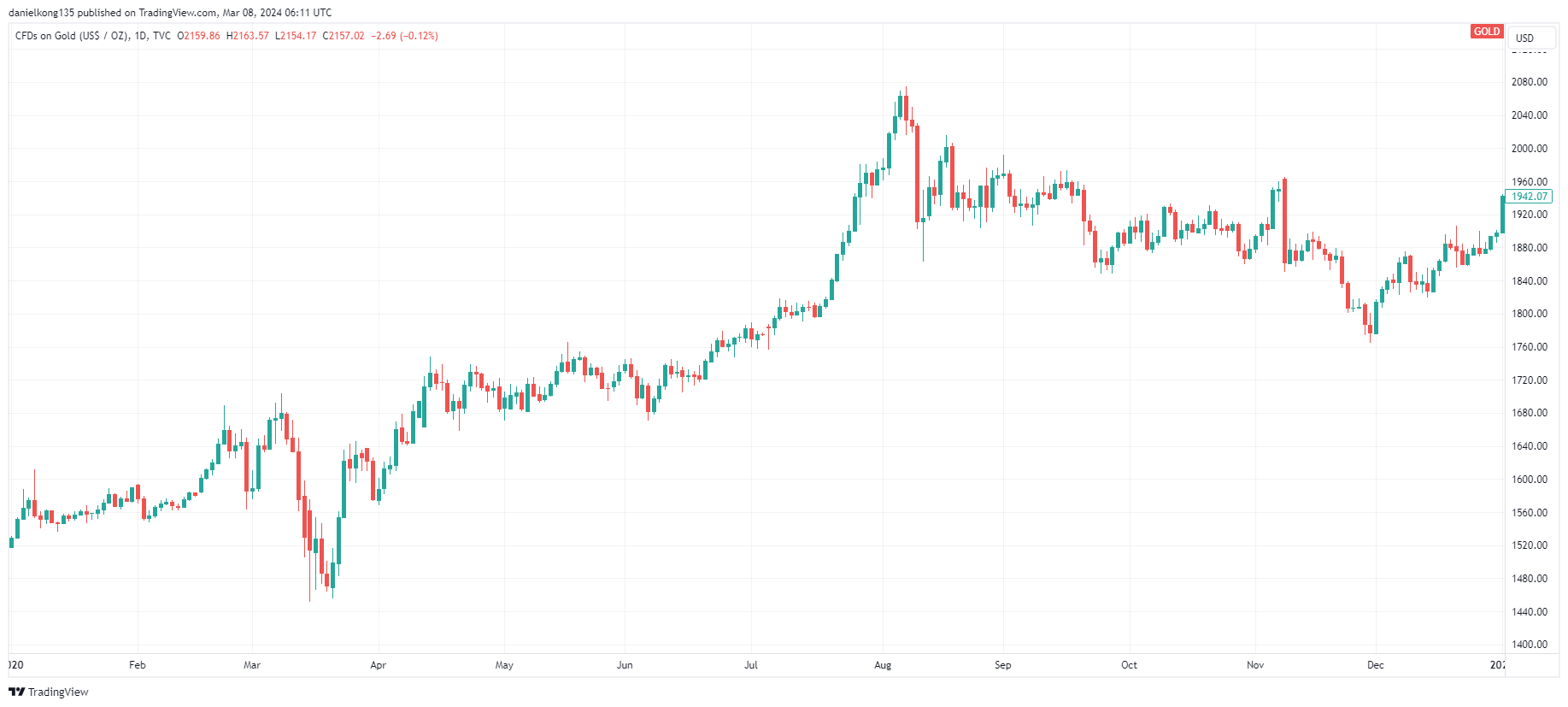
Conversely, when rates were cut during the pandemic in 2020, gold enthusiasts pushed its price over $2,000 to a record $2,047 in August 2020 [3].
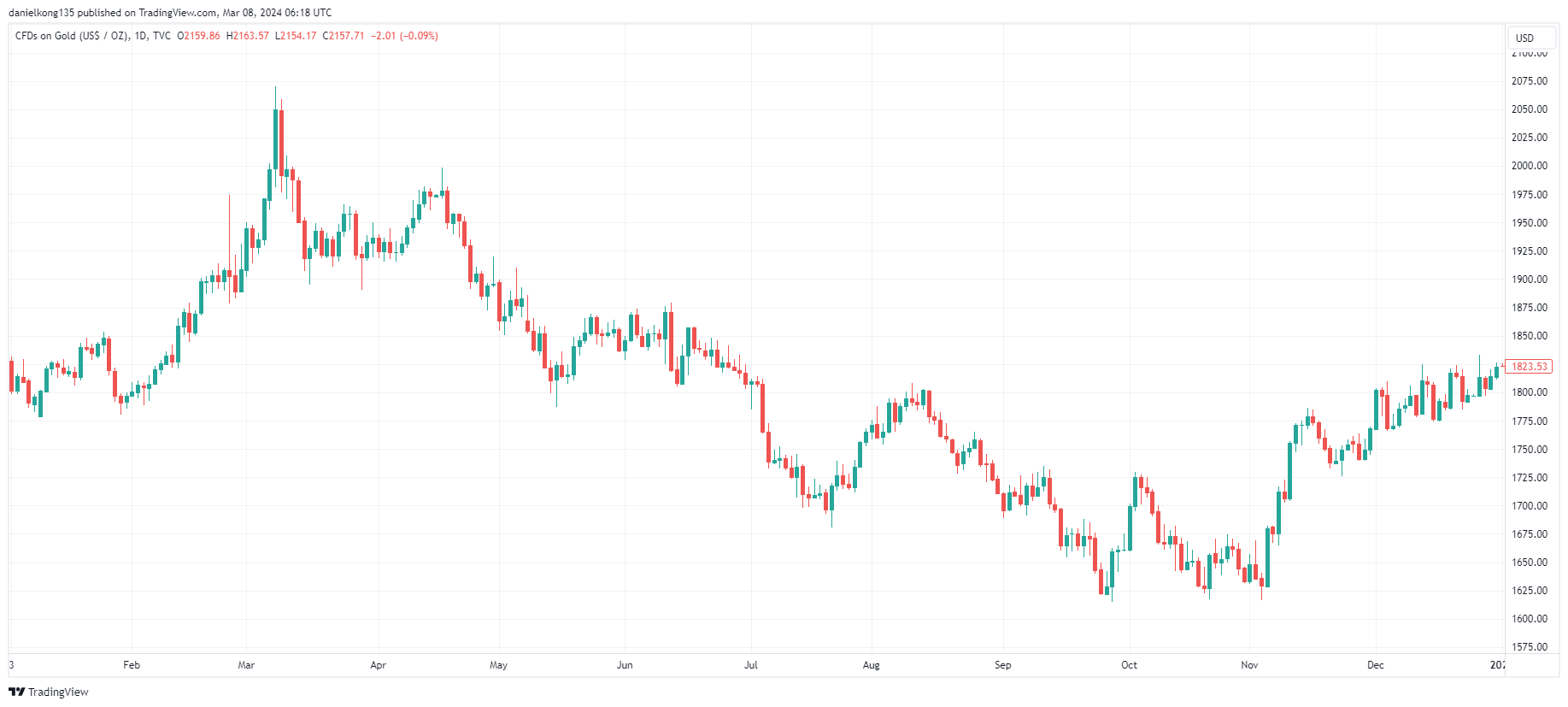
However, the commencement of the Fed’s rate-hiking cycle in March 2022 saw a decrease in gold prices.
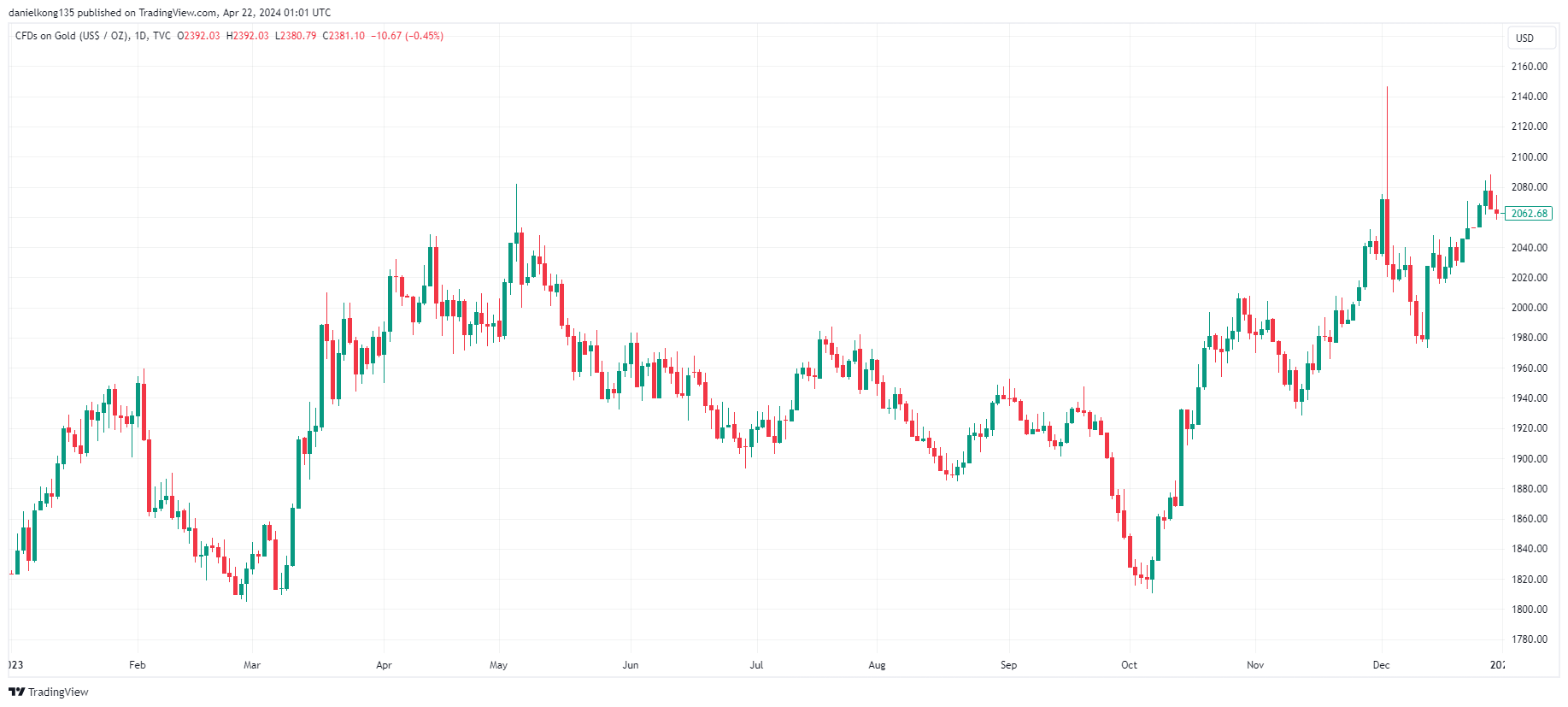
In 2023, gold prices remained relatively stable despite challenges posed by rising interest rates and a generally stronger U.S. dollar. Real yields, which account for inflation, rose from low levels, diminishing gold’s appeal given its lack of yield. This situation led to significant outflows from exchange traded funds (ETFs) in the investment community.
Nevertheless, this reduced demand was more than offset by robust purchases by central banks. In response to geopolitical tensions, central banks purchased a record amount of gold in the first three quarters of 2023, reflecting gold’s increased allure during times of uncertainty.
Curious about how gold prices have evolved? Dive deeper into our comprehensive article on the trend analysis of gold prices to broaden your macroeconomic understanding of gold and its price action.
Expectations of Gold going into 2024
At the end of 2023, market expectations regarding central bank policy shifted significantly. A decline in inflation and employment metrics led traders to revise their forecasts, shifting from expecting further rate hikes to anticipating rate cuts in the early part of 2024. These revised expectations of more lenient policies contributed to a weakening of the dollar, which in turn made gold more appealing.
However, in recent weeks, the anticipation of early rate cuts has been tempered as market participants adjusted their outlooks due to better-than-expected performance of the US economy. Persistent inflation, particularly driven by a robust labour market, has kept services inflation high. This situation suggests that interest rates might need to stay elevated for an extended period.
Learn about interest rates and impending rate cuts to navigate 2024 better.
Future Outlook for Gold
The outlook for gold remains exceptionally positive as we look toward 2026 and beyond. The policies of the US Federal Reserve will remain a crucial factor, as they determine the direction of interest rates and influence the US dollar and gold prices.
Current money market forecasts suggest an 85% likelihood of an interest rate decrease in December 2025, with expectations for additional cuts throughout 2026. Major investment banks have significantly raised their gold price forecasts for 2026:
- Deutsche Bank has increased its 2026 gold forecast to an average of $4,450 per ounce, with a projected trading range of $3,950-$4,950
- Goldman Sachs maintains its forecast of gold reaching $4,900 by the end of 2026
- Bank of America has indicated that gold could reach $5,000 per ounce in 2026
The sustained strength in gold through 2025, with prices rising approximately 50% year-to-date, represents the metal’s strongest annual performance since 1979 [4]. This extended rally further emphasised the global market’s attention to the relationship between the gold price and interest rates.
The investment strategies and positions of speculators and significant investors continue to play a critical role in determining gold’s future price direction. Following the October 2025 correction from the record high, positioning has stabilised, and with renewed expectations of Federal Reserve rate cuts in December, net inflows into gold-backed ETFs have resumed after a period of consolidation.
According to the World Gold Council’s Q3 2025 Gold Demand Trends report, total gold demand rose 10% in the first three quarters of 2025 year-over-year, led by strong investment inflows and continued central bank purchases. Despite record-high prices, 24% of central banks worldwide have indicated plans to increase their gold reserves over the next 12 months, potentially driving sustained long-term demand [5].
Additionally, physical demand for gold in China has remained robust despite elevated prices, as investors seek safe-haven assets amid concerns about property market stability and broader economic uncertainty.
In India, consumer adaptation to higher gold prices, supported by a resilient economic outlook and strong cultural affinity for gold, continues to support solid demand for physical gold purchases.
Conclusion
Gold has consistently attracted investors as a reliable store of value and a protective measure against economic turbulence and market uncertainties. The extraordinary price performance in 2025, with gold surging 50% to a record high of $4,381 per ounce, underscores the metal’s enduring appeal amid heightened global instability and a monetary policy transition.
These dynamics play a critical role in shaping central banks’ monetary policy decisions and interest-rate settings, which, in turn, influence the pricing and demand for gold. As the Federal Reserve has shifted toward a rate-cutting cycle in 2025, gold has responded with remarkable strength, underscoring the inverse relationship between interest rates and gold prices and highlighting once again the essential interest-gold price correlation.
Looking ahead, with major investment banks forecasting gold to reach between $4,450 and $5,000 per ounce in 2026, supported by continued central bank demand, potential further Fed rate cuts, and persistent geopolitical uncertainties, the outlook for gold remains compelling. However, investors should remain mindful that short-term volatility may persist as markets digest economic data and adjust expectations for the pace of monetary easing.
Thus, closely monitoring economic indicators, Federal Reserve policy signals, and geopolitical developments is essential to understanding the intricate relationship between the gold price and interest rates.
FAQs
How do interest rate hikes affect gold prices?
Interest rate hikes generally weaken gold prices because higher bond and cash yields make gold less appealing. A stronger dollar, which often accompanies rate hikes, can also put pressure on gold.
How do interest rate cuts affect gold prices?
Interest rate cuts usually support or lift gold prices. Lower yields reduce the opportunity cost of holding gold, while a weaker dollar and expectations of easier monetary policy tend to boost demand for gold.
Is gold a good investment when interest rates drop?
Historically, yes. Gold often performs well during periods of falling interest rates because investors shift toward safe-haven assets, inflation expectations rise, and real yields typically decline, all of which are supportive of gold.
Will gold prices drop if interest rates go down?
Generally, no. Falling interest rates tend to push gold prices higher rather than lower. However, short-term fluctuations can arise from market sentiment, economic data, or geopolitical events.
References
- “Gold surges as Middle East tensions spur safe-haven rush – Reuters”. https://www.reuters.com/markets/commodities/gold-prices-hit-record-highs-safe-haven-demand-2024-04-12/. Accessed 21 April 2024.
- “Gold price forecast for spring 2024: Here’s what experts predict – CBS News”. https://www.cbsnews.com/news/gold-price-forecast-for-spring-2024-heres-what-experts-predict/. Accessed 21 April 2024.
- “After Covid-19, just how high will prices go in the 2020 gold rush? – The Guardian”. https://www.theguardian.com/business/2020/aug/05/after-covid-19-just-how-high-will-prices-go-in-the-2020-gold-rush. Accessed 8 March 2024.
- “The U.S. economy grew at blistering 3.3% pace in Q4 while inflation pulled back – CNBC”. https://www.cnbc.com/2024/01/25/gdp-q4-2023-the-us-economy-grew-at-a-3point3percent-pace-in-the-fourth-quarter.html. Accessed 8 March 2024.
- “2023 Central Bank Gold Reserves Survey – World Gold Council”. https://www.gold.org/goldhub/data/2023-central-bank-gold-reserves-survey. Accessed 8 March 2024.