






 Updated
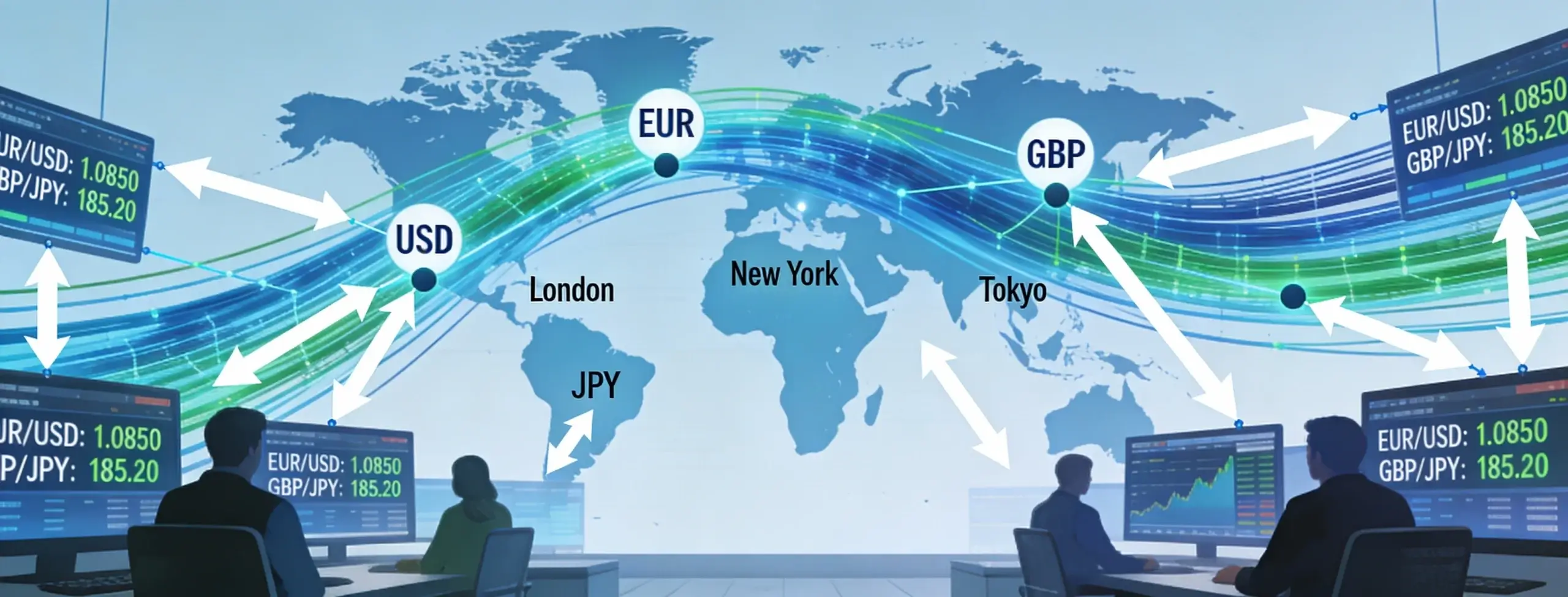
Liquidity is the oxygen of the FX market. You can’t see it, but you feel it in every trade. In this forex-only guide, we’ll break down forex liquidity in plain trader terms. You’ll learn what it really means for a pair to be “liquid,” who provides it, and how orders are matched.
We’ll connect liquidity to what hits your bottom line: tighter or wider spreads, clean fills or slippage, and the actual cost of getting in and out. We’ll also map how liquidity shifts across Asia, Europe, and New York, and how it responds to news. This is for traders, not accountants.

What Liquidity Means in Forex Trading
When traders ask what liquidity is in forex, the most straightforward answer is this: it’s how easy it is to buy or sell a currency pair fast, at a fair price, without pushing the market around.
In liquid markets, there are many buyers and sellers across a wide range of price levels. That depth makes orders easier to fill, keeps spreads tighter, and lowers your overall trading costs.
In thin markets, fewer traders are active, and price levels can be “gappy.” That’s when spreads widen, fills get messy, and slippage shows up more often, especially on market orders or during sudden moves. So, liquidity in forex is not a boring market term. It’s the difference between getting the price you expected and paying an extra hidden fee in the form of spread and slippage.
- High liquidity: major pairs during London and New York sessions (and their overlap)
- Medium liquidity: some minor pairs, depending on the session and news flow.
- Lower liquidity: many exotic pairs and off-peak hours, weekends, or holiday trading.
If you’ve ever clicked buy and watched the price jump before you got filled, you’ve already met liquidity.
What Is Forex Liquidity?
What is liquidity in forex? It’s the market’s ability to let you buy or sell a currency pair quickly, in size, and close to the price you see, without your trade causing a big move. Think of liquidity as “ease of trading.” The deeper the pool of buyers and sellers, the easier it is to get filled at fair prices.
A solid grasp of volatility and liquidity in forex is essential to understanding how the market will behave. Volatility is the extent to which a price moves up and down. Liquidity, on the other hand, is how smoothly you can trade. You can have a liquid market that’s moving fast (high volatility during a news release), and you can have a quiet market that’s still thin (low activity late in the day).
Here’s a simple way to feel the difference. In a very liquid pair like EUR/USD during the London–New York overlap, you usually see tight spreads and steady trade flow. If you place a standard-sized order, it is often filled instantly at your expected price. Many orders are sitting on both sides of the market, so one trade doesn’t “push” the price much.
Now compare that to a thinner pair, maybe an exotic or a less-traded cross during off-peak hours. Fewer orders are waiting at each price level. If you send a market order, it may execute at the worst available price and fill worse than expected. Spreads can be wider, and slippage becomes a real risk. That’s the liquidity in forex: depth and competition reduce your cost; thin markets raise it.
Even though the global FX market has high daily turnover, liquidity varies by pair and by time of day. Major pairs tend to be most liquid during the main sessions, while minors and exotics can thin out fast outside their “home” hours.
So when you ask what liquidity means in forex, remember it’s not a textbook concept; it’s what determines your spread, fill quality, and actual trading cost.
Deep Liquidity vs Thin Liquidity in Forex
Forex trades 24 hours a day, but activity is not even. Forex daily liquidity rises and falls with the major trading sessions. When more banks, funds, and market makers are active, spreads tend to tighten and fills improve. When fewer players are in the market, spreads can widen, and prices can feel more volatile.
There are three core sessions: Asian, London, and New York.
The London session is the workhorse. It’s usually very active for EUR, GBP, and other European pairs. You often see substantial volume, tight spreads, and clean follow-through when price breaks key levels. If you trade EUR/USD, GBP/USD, EUR/GBP, or GBP/JPY, London is often where the “real” move starts.
The London–New York overlap is often the peak. Two major financial centres are open simultaneously, so liquidity accumulates quickly across many major markets. For pairs such as EUR/USD and GBP/USD, this overlap can provide the optimal mix of tight spreads and strong momentum. It’s also a time when news and data releases can move markets sharply, even in liquid conditions.
The New York session is strongest early on, especially for USD pairs. That’s when U.S. data, flows, and positioning tend to matter most. Later in New York, activity can fade, and liquidity can thin out into the close.
The Asian session can be very active for JPY, AUD, and NZD pairs. Think USD/JPY, AUD/USD, and NZD/USD. But for some EUR and GBP crosses, trading can be quieter, with thinner order books and a slower pace until European markets open.
Why Forex Liquidity Matters for Trade Costs
Forex trading costs are not just about your strategy. They’re also about the market’s “traffic” when you trade. Forex liquidity is a significant factor, as it shapes two things you notice immediately: the spread and your fill quality.
The spread is the difference between the buy and sell prices. You pay it the moment you enter. If you buy, you start slightly negative because you can only sell at the lower bid. That spread is a real cost, just like a fee, even if your broker charges “zero commission.”
When liquidity is high, many buyers and sellers are competing at each price level. That competition often tightens spreads. It also helps orders fill closer to the price shown on your screen, as there are more resting orders available to match your trade. In normal conditions, entries and exits tend to feel clean.
When liquidity is low, fewer orders sit in the market. Spreads can widen because there’s less competition and less depth. At the same time, slippage becomes more common. You click to enter or exit, but the fill comes back slightly worse than expected because the price had to “reach” for available orders.
Here’s a simple comparison. Suppose you trade a major pair like EUR/USD during the London–New York overlap. The spread is often tight, and a market order usually fills close to the displayed price. Now trade the same pair very late in U.S. hours, or around a major holiday. Activity drops. The spread can widen, and a rapid move can lead to a worse fill. Push that idea further by using a thinner exotic pair during off-peak hours; the cost gap can widen.
Why does this matter?
A wider spread means your trade needs more movement to break even. If the spread doubles, your “hill to climb” doubles too. Thin liquidity also raises the chance of slippage at both entry and exit, which can quietly turn a good setup into a disappointing result. One common consideration traders examine is how pair selection, order type, and timing interact with liquidity during active market hours.
How Traders Can Tell If a Market Is Liquid or Thin
You can’t see every order in the global Forex market. There’s no single “order book” that shows all flows. But you can read liquidity from clues your platform shows you every day.
Start with the spread. When the market is liquid, spreads tend to stay tight and stable. When the market is thin, spreads often widen and can change quickly. If you notice the spread fluctuating for no apparent reason, liquidity is likely dropping.
Next, watch how the price ticks. In liquid conditions, price updates frequently. It moves in smaller steps, and it feels “busy.” Under thin conditions, updates may slow. Price may remain stable, then jump in larger steps. That’s a sign that fewer orders are at the current price.
Pay attention to execution speed and fill quality. In a liquid market, orders usually fill quickly and close to the price you clicked. In thinner conditions, fills can lag, and slippage becomes more likely, especially with market orders and around sudden news.
Also, look at the candles. Liquid periods often produce smoother candles with cleaner follow-through. Thin periods can produce spiky candles with long wicks, quick snap-backs, and uneven moves. A single order can push the price farther than you expect.
A common approach to studying liquidity is to observe how a pair behaves across different times of day. Watch it during your usual trading hours. Then check it during other sessions, late hours, and holiday periods. Compare how:
- tight or wide, the spread is
- steady or jumpy, the price action feels
- clean your filters on entries and exits
No single clue is perfect. But when several line up wider spreads, slower ticks, spiky candles, and worse fills, you’re likely in a thinner market. That awareness helps you adjust trade size, order type, and timing before the market charges you extra.
Why Forex Liquidity Matters for Retail Traders
For retail traders, liquidity isn’t a theory. It’s what decides how your trades feel in real time. When liquidity is strong, you often get cleaner entries and exits. Spreads tend to stay tighter, and your order fills are faster and closer to the price you saw. When liquidity is thin, the same setup can cost more. Spreads can widen, fills can slip, and prices can jump in ways that don’t match the chart “logic.”
This is most evident at the worst moments: around news, in tranquil hours, and during holidays. In those periods, the market can move fast and be thin. That mix can turn a routine stop into a worse-than-expected exit. Liquidity also matters more when you trade larger sizes.
A small position may barely notice a thin patch. A larger one can feel every extra point of spread and every bit of slippage.
It also matters when you trade thinner pairs. Majors such as EUR/USD and GBP/USD typically see deeper flow during peak hours. Many minors and most exotics do not. Thin pairs can still be traded, but they penalize mistakes more quickly.
In educational discussions, major pairs are often used as examples during active sessions because they are more liquid. Spread behaviour, order execution, and market conditions around news events are commonly analysed when studying how liquidity changes throughout the day.
Still, liquidity is only one piece. A clear plan, smart position sizing, and strict risk rules matter more than anything else. Liquidity helps you execute that plan with fewer surprises.
Frequently Asked Questions
What does liquidity mean in forex trading?
It means how easy it is to buy or sell a pair fast without pushing the price much. In forex, liquidity refers to the number of active buyers and sellers, which usually results in smoother trading.
Which forex pairs are usually the most liquid?
Major pairs are usually the most liquid, like EUR/USD, USD/JPY, GBP/USD, and USD/CHF. They trade heavily during the main sessions, so spreads are often tighter.
Does higher liquidity always mean lower risk?
No. High liquidity can reduce spread and slippage, but it does not remove market risk. News can still move prices fast, even in very liquid pairs.
How does liquidity affect spread and slippage?
When liquidity is high, spreads often tighten, and fills tend to be closer to your screen price. When liquidity is thin, spreads can widen, and slippage becomes more common, especially on market orders.
Why is liquidity lower during some sessions or holidays?
Liquidity drops when fewer banks and large traders are active. Late U.S. hours, early Asia, and holiday periods often have lower participation, making the market feel thinner and more volatile.
Why is understanding liquidity commonly discussed in retail forex education?
Liquidity is commonly covered in retail forex education because it affects spreads, execution, and market behaviour. Knowing what liquidity means in forex helps you pick better times to trade, avoid nasty spreads, and reduce slippage surprises. It won’t replace a plan or risk rules, but it helps your execution.
RISK WARNING: CFDs are complex financial instruments and carry a high risk of losing money rapidly due to leverage. You should fully understand the risks involved and carefully consider whether you can afford to take the high risk of losing your money before trading.
Disclaimer: The information is provided for educational purposes only and doesn’t take into account your personal objectives, financial circumstances, or needs. It does not constitute investment advice. We encourage you to seek independent advice if necessary. The information has not been prepared in accordance with legal requirements designed to promote the independence of investment research.
No representation or warranty is given as to the accuracy or completeness of any information contained within. This material may include historical or past performance figures and should not be relied on. Furthermore, estimates, forward-looking statements, and forecasts cannot be guaranteed. The information on this site and the products and services offered are not intended for distribution to any person in any country or jurisdiction where such distribution or use would be contrary to local law or regulation.
References
- https://www.investopedia.com/terms/l/liquidity.asp? – Understanding Liquidity and How to Measure It
- https://liquidityfinder.com/insight/liquidity/what-is-liquidity-and-volatility-in-forex/–What is Liquidity in Forex?
- https://www.sciencedirect.com/science/article/abs/pii/S0889158306000463? – Intraday seasonality in activities of the foreign exchange markets: Evidence from the electronic broking system
- https://forexopher.com/liquidity-in-forex-market/ – Importance of Liquidity in the Forex Market